
What Files Should You Receive From a Logo Designer?
Here is a breakdown of the exact files and formats you should receive from your logo designer:
Vector Files
Vector files can be scaled exponentially without losing clarity. Often, you will not be able to open these files without a graphics program, but keep them archived as you will need them at some stage!
EPS (Encapsulated PostScript)
While you will not be able to open this file without a graphics program, they will often be requested by printers and signwriters or for large format designs where a low resolution jpeg is insufficient.PDF (Vector-based)
A highly versatile vector format that you can easily viewed and shared.SVG (Scalable Vector Graphic)
The best vector format for web developers to ensure your logo looks good on modern screens.Rasta Files
Rasta files are pixel based image files designed specifically for screens and web. They can be used for printing if the size and resolution is appropriate. Rasta files can’t be blown up beyond their original size as they will lose clarity and become blurry or pixelated.
PNG FILES (Transparent Background)
Essential for your website, presentations, and digital. Using PNG files with a transparent background ensures your logo doesn't have a clunky white box behind it.JPEG FILES (Solid/White Background)
Jpeg files are best used for emails or documents where a solid background is perfectly fine.Logo Design Variations
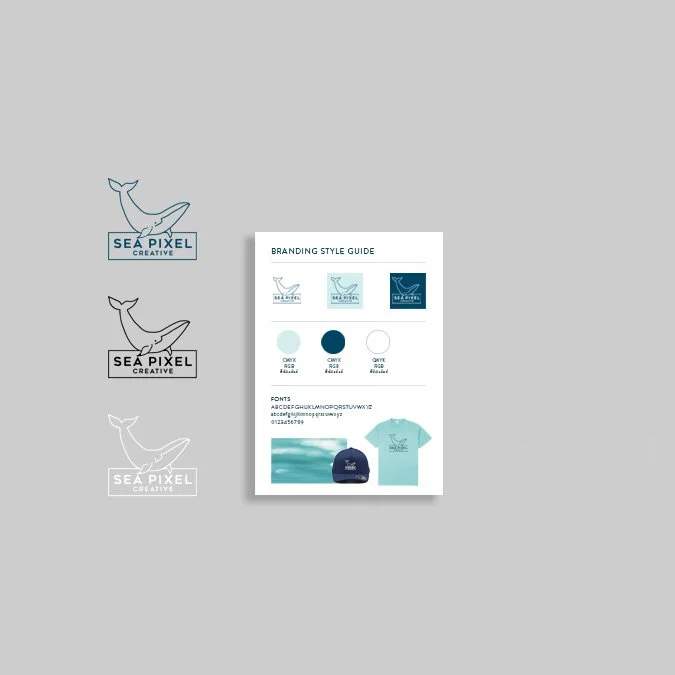
A complete logo package will usually provide folders containing these file types across different colorways to ensure your logo works on any background:
- Full Colour: Your primary logo.
- Monochrome: All black and all white versions
- Portrait, landscape, stacked and/or roundel. This can de dependent on the design as not all concepts lend to a eg. landcape variation
- CMYK, RGB and greyscale optionsBrand Guidelines
A branding guidelines document or Style Guide is a PDF detailing how to correctly use your logo. It should include:
- Colour palette codes like HEX, CMYK, and Pantone (PMS) colours.- Typography: The names of the fonts used and their suggested pairings.
- Clear Space: Rules on how much empty breathing room must surround the logo.
- Logo usage examples